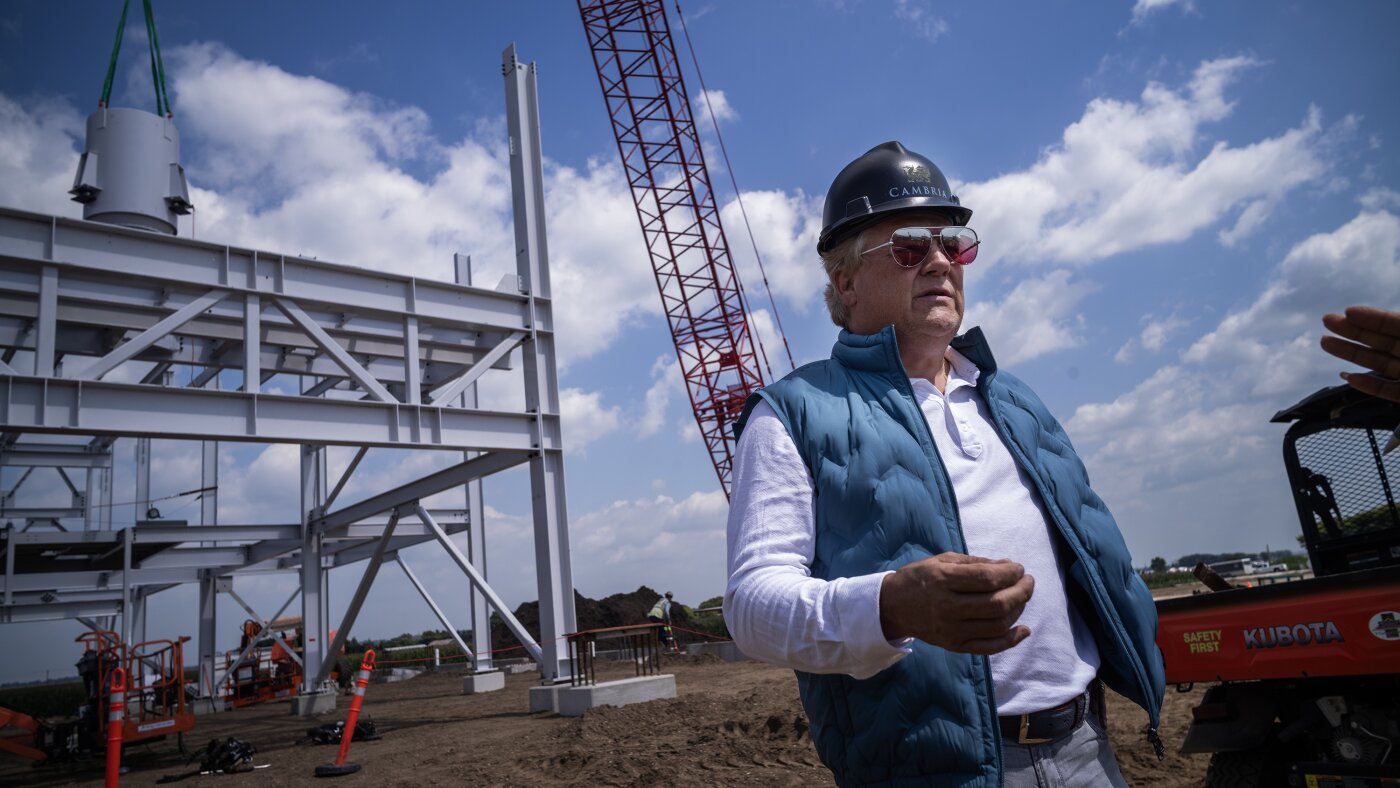
Comprehensive US stock regulatory environment analysis and policy impact assessment to understand business risks from government regulations and policies. We monitor regulatory developments that could create opportunities or threats for different industries and individual companies. We provide regulatory analysis, policy impact assessment, and compliance monitoring for comprehensive coverage. Understand regulatory risks with our comprehensive regulatory analysis and impact assessment tools for risk management. Cambria CEO Marty Davis, a prominent donor to former President Donald Trump, has successfully lobbied the U.S. government to impose tariffs on imported quartz—a move that his business competitors argue unfairly tilts the market in his favor. The controversial tariff decision has sparked a heated dispute within the domestic quartz industry, raising questions about the influence of political donations on trade policy.
Live News
- Lobbying and political donations: Marty Davis is a well-known donor to Trump-aligned political action committees, having contributed over $1 million in recent election cycles. His successful tariff petition has drawn scrutiny from trade policy observers who question whether campaign contributions can influence trade decisions.
- Impact on competitors: Smaller U.S. quartz companies and importers have reported increased costs and supply chain disruptions since the tariffs took effect. They argue that the tariffs are a weaponization of trade policy to eliminate competition rather than a genuine response to unfair trade practices.
- Consumer implications: Homeowners and contractors may face higher prices for quartz countertops if the tariffs remain in place. Domestic producers could raise prices to match the higher cost of imports, reducing consumer choice in the building materials market.
- Legal and procedural aspects: The case is currently under review by the U.S. International Trade Commission, with a final determination expected in the coming months. If the tariffs are made permanent, they could reshape the competitive landscape of the quartz industry.
Cambria CEO Marty Davis Leverages Tariff Policy to Gain Competitive Edge in Quartz MarketThe integration of AI-driven insights has started to complement human decision-making. While automated models can process large volumes of data, traders still rely on judgment to evaluate context and nuance.Scenario-based stress testing is essential for identifying vulnerabilities. Experts evaluate potential losses under extreme conditions, ensuring that risk controls are robust and portfolios remain resilient under adverse scenarios.Cambria CEO Marty Davis Leverages Tariff Policy to Gain Competitive Edge in Quartz MarketAnalytical platforms increasingly offer customization options. Investors can filter data, set alerts, and create dashboards that align with their strategy and risk appetite.
Key Highlights
In a recent development that highlights the intersection of political influence and trade policy, Marty Davis, CEO of Cambria—a leading manufacturer of quartz countertops and a known donor to Donald Trump’s political campaigns—has successfully petitioned the U.S. government to impose tariffs on imported quartz. The tariffs, which were approved by federal trade authorities, are designed to protect domestic producers from what they argue are unfairly low-priced imports, particularly from countries like China and India.
Cambria’s competitors, however, are crying foul. They contend that the tariff request is not about protecting the industry but rather about shielding Cambria from legitimate competition. Several smaller quartz fabricators and importers have publicly criticized the move, claiming that Davis leveraged his political connections to secure a regulatory advantage that will ultimately raise costs for American consumers and small businesses.
The U.S. International Trade Commission, after a preliminary review, determined that imported quartz may be causing material injury to the domestic industry. This finding allowed Cambria’s petition to move forward, resulting in temporary tariffs pending a full investigation. Davis has defended the tariffs, stating they are necessary to level the playing field and prevent dumping—a practice where foreign producers sell goods below market value to gain market share.
Cambria CEO Marty Davis Leverages Tariff Policy to Gain Competitive Edge in Quartz MarketAlerts help investors monitor critical levels without constant screen time. They provide convenience while maintaining responsiveness.Continuous learning is vital in financial markets. Investors who adapt to new tools, evolving strategies, and changing global conditions are often more successful than those who rely on static approaches.Cambria CEO Marty Davis Leverages Tariff Policy to Gain Competitive Edge in Quartz MarketSome investors prioritize clarity over quantity. While abundant data is useful, overwhelming dashboards may hinder quick decision-making.
Expert Insights
The use of tariffs by a politically connected CEO to target rivals raises significant questions about fairness in trade policy. Trade experts caution that while companies have a legal right to petition for tariff relief under antidumping laws, the process can be vulnerable to abuse when petitioners have close ties to political power. “The system is designed to address genuine market distortions, but it can also be gamed by well-resourced interests,” notes a trade policy analyst at a nonpartisan research group.
For investors and industry observers, the Cambria case may serve as a bellwether for future trade disputes. If the tariffs are upheld, it could encourage other politically influential companies to pursue similar protectionist measures. Smaller rivals without such connections could find themselves at a structural disadvantage, potentially leading to market consolidation.
The long-term implications for the U.S. building materials sector remain uncertain. While domestic producers like Cambria may benefit from reduced import competition, higher input costs could dampen demand for quartz countertops overall. Consumers might shift to alternative materials such as granite or solid surface, altering market dynamics. As trade authorities continue their investigation, stakeholders across the supply chain are watching closely for signals on how U.S. trade policy will evolve under political influence.
Cambria CEO Marty Davis Leverages Tariff Policy to Gain Competitive Edge in Quartz MarketMarket participants increasingly appreciate the value of structured visualization. Graphs, heatmaps, and dashboards make it easier to identify trends, correlations, and anomalies in complex datasets.Using multiple analysis tools enhances confidence in decisions. Relying on both technical charts and fundamental insights reduces the chance of acting on incomplete or misleading information.Cambria CEO Marty Davis Leverages Tariff Policy to Gain Competitive Edge in Quartz MarketSome investors track currency movements alongside equities. Exchange rate fluctuations can influence international investments.